
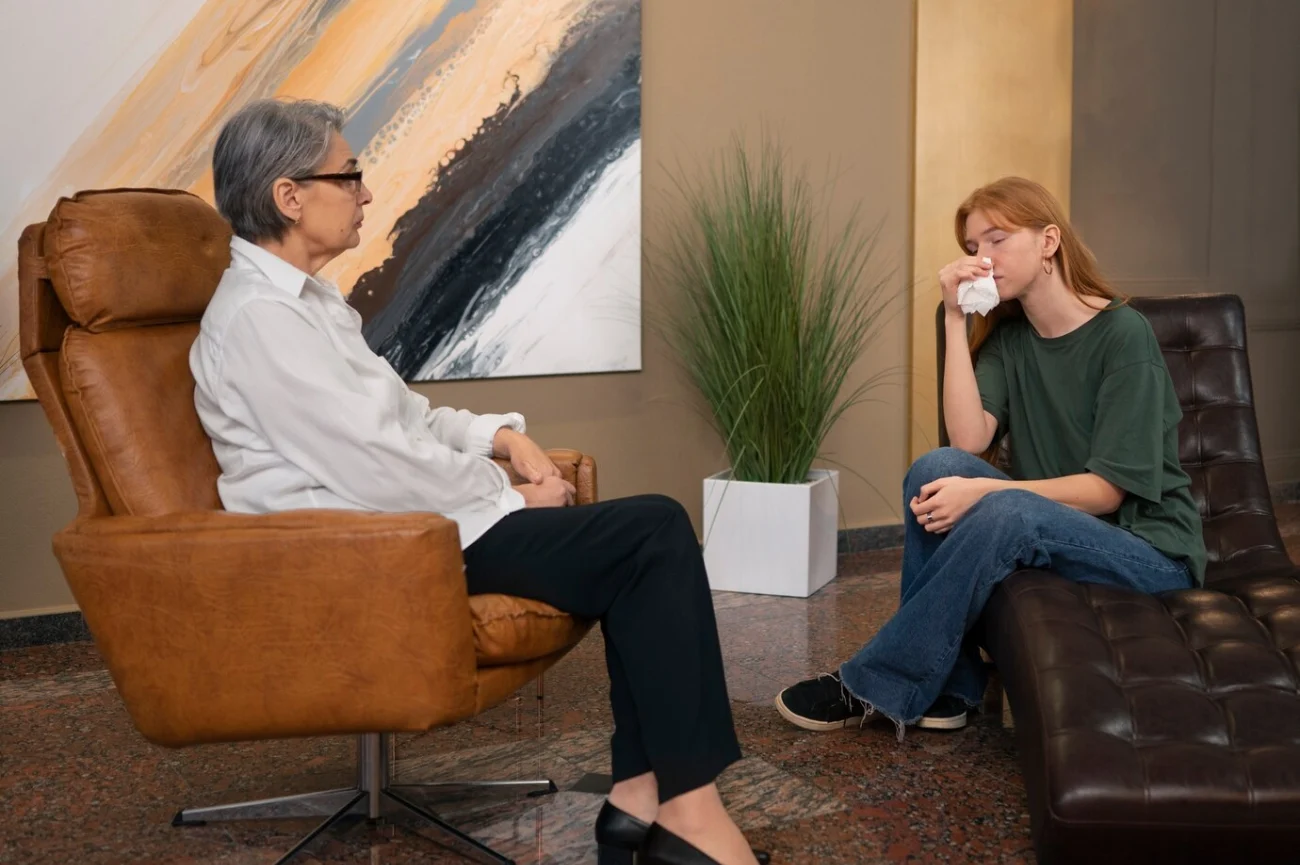
Therapy has received bad rep for a while now. “Therapy is just paying to speak to someone”, “therapy is only for crazy people”, “it is for weak people”, “therapy makes you dependent on your therapist”, “therapists just nod along”, “talking about it will only make it worse” and on it goes.
There have been many reasons why these false assumptions about therapy have been going around for so long. These myths in themselves continue to maintain the stigma and taboo surrounding mental health and therapy which adds to the lack of awareness and openness to the idea. Some of it also comes from the misrepresentation of therapists to be mind readers, pseudoscience practitioners and even hypnotists.
How about we take a minute to just hear from a therapist herself what therapy is and what it is not? And I am not here to convince you to take therapy. I just want you to look at it for what it is.
How about we walk through and bust a few of these myths?
- Therapy is more than just talking. While having insightful and reflective conversations is at the crux of therapy, it is not the only thing that happens in a session. A lot of times, therapy sessions include activities that may be behavior experiments, art-based reflections and even “homework” that a therapist may give to their client to practice or work on in between sessions.
- Therapy is not just for “crazy people.” In fact, something that therapists strive towards is to eliminate derogatory words like “crazy,” “mad,” “mental,” etc. that are not only demeaning but also perpetuate the shame and stigma surrounding difficult mental health experiences. Also, therapy is for everyone and anyone. Therapy often acts like a status update meeting where you get to pause and really take account of everything that may be happening in your life and if there is something that you would like to work on more actively or do differently.
- Therapy does not make you weak or dependent. Contrary to popular belief, therapy is not just about ranting or advice giving. The core values that a therapist practices from is the idea of agency and autonomy where we hold the client’s independence and their capacity to choose for themselves as the starting point. Since autonomy is assumed, so is responsibility and accountability. The aim is to create a non-shaming and respectful space where one can make choices for themselves and take accountability of their action and the consequences.
- Talking about something does not make it worse. There is, of course, a possibility that talking about your hardships and emotions can make you feel overwhelmed. What we prioritize in a therapeutic space is to increase the capacity to sit with discomfort in a way that allows one to really look at it and see what about it is uncomfortable and then work on it in whatever direction they may choose.
I can really go on and on on this journey of debunking therapy myths since I see no scarcity of them. Maybe I will, you might just see a part two of this blog. But what I’m really trying to say is that there is so much more to therapy than the same old recycled taboo that is going around. I wish to invite you to do your own research, be open and create a safe space for those around you and yourself who may be needing something like this.